
How long have you been making saddles?
I have been working in the industry for 5 years.
What is the most challenging aspect of your line of work?
Some people find it extremely hard to understand the relationship between the horses back and the saddle tree.
I would like to use this as an example often we see people get caught up in the terminology Semi Qh, Full Qh in western saddles. Some people may be convinced their horse is a quarter horse therefor needs full qh bars.
Public perception would have a stock horse/thoroughbred as narrow and a quarter horse as wide. This is not the case a breed does not cement in place what type of back the animal is going to have. I’ve seen wide thoroughbreds and narrow quarter horses.
Another reason these terms are irrelevant is every tree maker makes his trees to his individual specifications.
When making a saddle I believe it must fit the horse, the rider.
I believe horse riders need to understand more about their horses back and the effects their saddle has on their horse.
What made you decide to take this career path?
I wasn’t thinking! Joking! My horse Stewie, I was finding commercial products did not fit stewie correctly or lasted so I decided to try and improve the quality for my local community.
What is the most rewarding aspect of your job?
Crafting something high quality, unique with my brand on it that someone loves and enjoys.
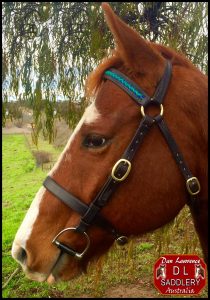
Yesterday I finished a Show Barcoo Bridle for a lady, she is super excited to be receiving it and using it in the coming show season. I love these positive people as its very rewarding.
Where did you learn the craft?
There is currently no formal training or apprenticeships to learn to be a saddler.
There are several good books and training DVD’s for western saddles.
The Saddlers and Harness Makers Association of Australia have been trying to get a course going in conjunction with Scone TAFE so if anyone is interested in learning to be a saddler I’d advise to ring Scone TAFE and express your interest.
I’ve had several mentors over the years.
Kerry Cain from Newcastle, Craig Robinson from Kentville QLD, Tom O’Sullivan from New Zealand, Michael Bethel from Charters Towers QLD, Dennis Lane from Quirindi NSW
When I first started Kerry helped me get started in the trade. He helped me with my strapping and we made saddles. Kerry is a harness maker so a very good hand sewer.
Craig had me up for a month and we did several saddle repairs. I learnt quiet a bit about the Dennis Lane Equine Profiling system and the importance of a well fitting saddle from Craig.
Michael is one hell of a western saddler and helped me get my western strapping where it is today.
Tom is one of my best mates his an English saddle maker from NZ, we talk just about everyday about things we are making. We have a lot of constructive discussions about what we are making and the relationship between horse and rider.
Dennis is a very good friend we see each other at least once a week and help each other out. Dennis taught me a lot about the importance of saddle tree fit. Dennis is amazing tree maker and saddle maker. He is a wealth of knowledge and has been doing this since he was a kid.
I’ve been very fortunate to have these amazing people come into my life and help me along the way.
What is the best piece of advice anyone has given you in regards to saddle making?
Slow down and take your time. Speed will follow.
Measure twice cut once.
How many hours of work goes into one of you custom made saddles?
A very hard question to answer as every custom saddle is different and may require more or less work depending on the individual’s needs. 30+ hours would be a starting point.
Talk us through the process of making a saddle from start to finish
Most moulded trees suit a certain range of horse and rider. Moulders are restricted by their mould for the dimensions of their saddle tree.
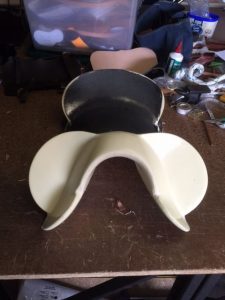
If the person is wanting something more specialized for themselves and the horse that is where the custom rawhide covered tree comes in.
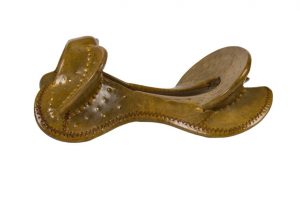
When making a custom saddle tree I get as much information as possible about the horse and rider.
I prefer to see the horse and rider however this isn’t always an option.
My customers measure their horses using Dennis Lane Equine Profiling system.
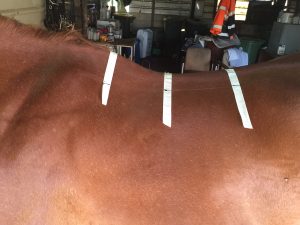
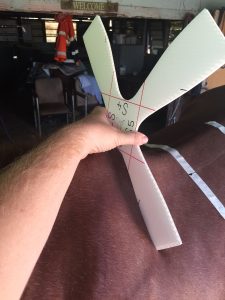
The benefits of this system is it’s a language for the rider, tree maker and saddle maker.
I usually get them to provide me their weight, height and thigh measurement.
Once Dennis makes the tree. The leather is rough cut out of several sides of leather. I prefer to go and pick the leather out I am going to use to get my customers the best quality.
With western saddles I usually do it in this sequence I try to fulfil orders as soon as possible but most of my customers are happy to wait for a really good job. A lot of time goes into making patterns.
We generally construct the saddle in the sequence below.
Ground Seat
This is fitting the gullet chamber cover, tin and several layers of leather are put down and carved accordingly for the human pelvis.
Swell Cover
Currently I do my swell cover in 2 pieces. Basically one piece is the gullet cover and the other piece covers the swell. I do folded welts, sewn in by hand.
Cantle back cover
This is pretty straight forward, you can tool this if you wish. This piece of leather covers the back of the cantle and gives something for the roll to be sewn onto.
Skirts & Jockeys
The skirts are cut out, fitted and blocked to the saddle tree. I will then fit the rear jockeys. After this is done they are taken off and rest is done on the bench. Fitting Rigging, Sewing and fitting Rigging shield, Sewing sheep skin or felt liner onto skirts.
Seat
The seat is cut out, fitted wet and blocked. It takes time to do this and to work the leather in. After its blocked you tweak it to make look uniformed on both sides.
Fenders
I usually do this while seat is drying.
Fenders get cut out. I use full stirrup leathers so they get cut out of pvc or leather and sewn/riveted to fender with Blevins. I then set the fenders also known as the Nevada twist.
Cantle binder
The cantle binder is cut out. Seat and Cantle cover is trimmed up. Marked out and set for stitching.
Finish
The saddle is oiled and polished to give it presence.
What other pieces of tack do you make?
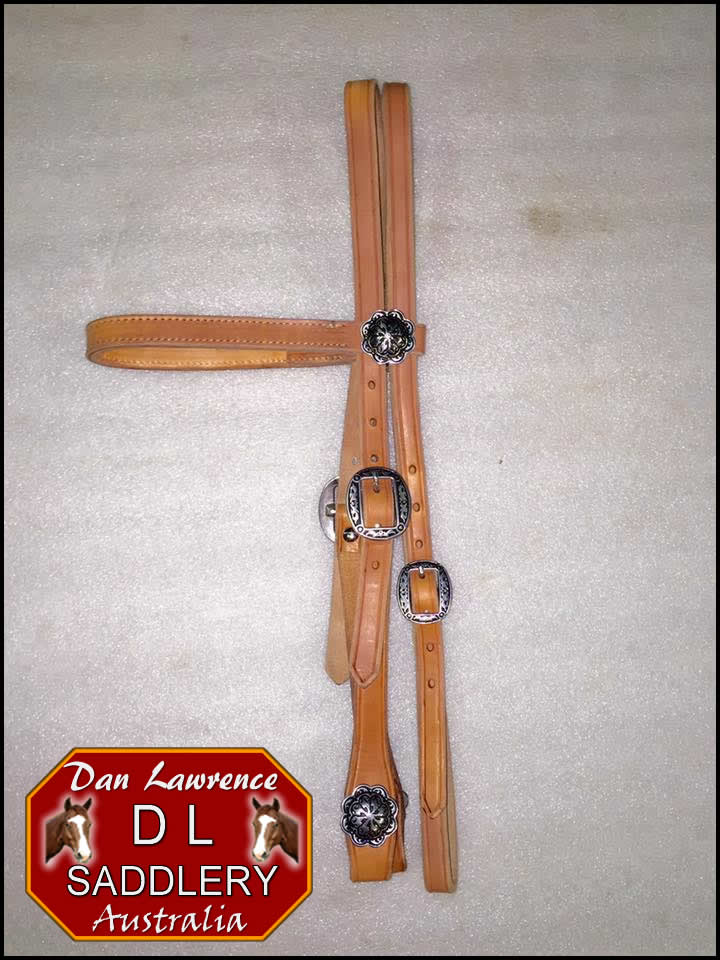
I make bridles, breastplates, reins, spur straps, hobbles, saddle bags, chaps, girths, belts etc

Are you a rider yourself?
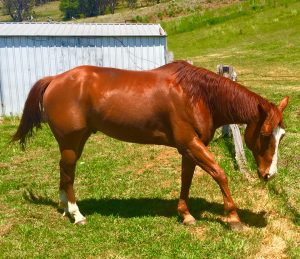
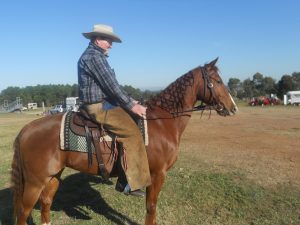
Yep I ride every opportunity I have. I have 2 horses currently.
In your opinion, what are the most important aspects of a well made and fitted saddle?
I constantly tell people you get what you pay for. You don’t get a land cruiser for the price of a great wall they are two different products saddles are the same.
A well made custom saddle will be similar to a land cruiser. It is built to last for Australian conditions and take a beating. Often they will be slightly heavier.
The benefits of a well fitting saddle include both comfort for you and your horse.
Ideally the saddle tree should match the type of horses you ride. If the saddle tree fits the horses back correctly it will distribute the riders weight evenly across the bars.
A lot of the cheap saddles have trees that are asymmetrical and are poorly made. A horse with good confirmation will be symmetrical. A saddle will outlast a horse so I only build on symmetrical trees.
A horse with poor confirmation ie. club foots, cockered legs is not symmetrical making it impossible to fit with a symmetrical tree. Due to faults in confirmation the muscles in the back will develop different on one side to the other making the horse asymmetrical.
A lot of horses get sore from an unsuitable saddle tree, a chiro and dentist will be needed to correct the problems. Most injuries will then take some time to heal. Often the rider is clueless because the horse is unable to talk. Horses are a huge animal and depending on the animal nature will put up with a lot of pain.
It is just wasting money getting a chiro and dentist if you don’t fix the problem which is the saddle.
Its very common for people to go through several pads, several saddles and be no further ahead. Most will say they can’t afford a custom made saddle. Well when you do the math they have probably spent more money on products and getting injuries fixed then buying a custom saddle.
I believe it is very important to look after your horse’s condition and have it in its typical in work/riding frame when fitting a saddle.
Where are you located?
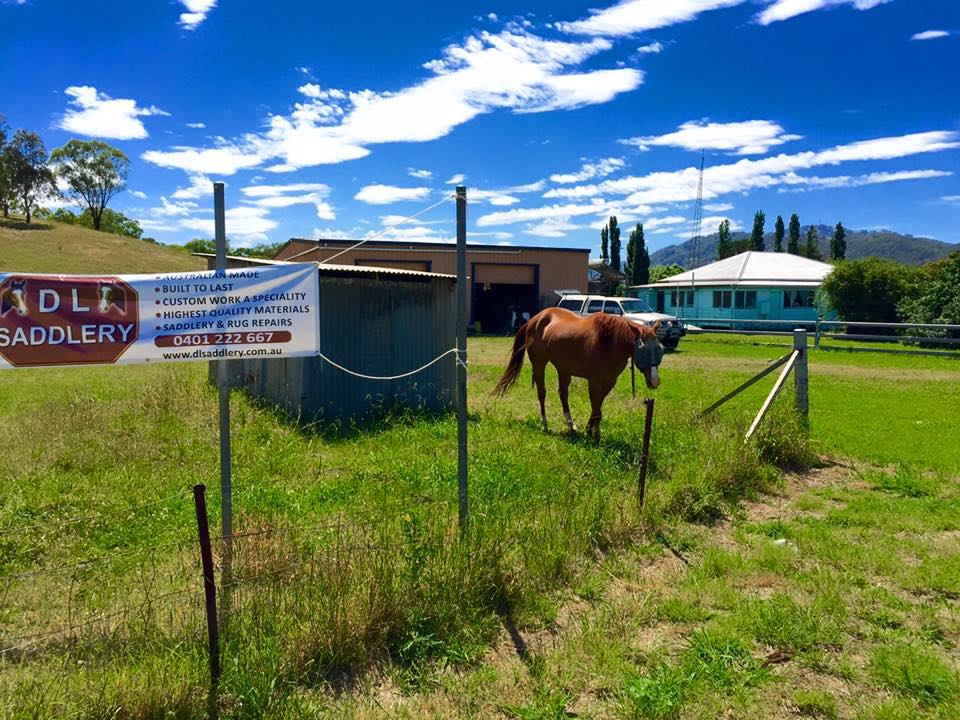
My shop is located in Blandford NSW, In between Tamworth and Scone.
Anyone is welcome to call in I prefer people to call my mobile before calling in.
How can people get in touch with you?
You can visit my online store www.dlsaddlery.com.au for all my contact details.
You can also follow us on facebook. Search D L Saddlery – Dan Lawrence.
Leave a Reply
You must be logged in to post a comment.